
A change from traditional food
What do you think about when you think about food in the Czech Republic? Personally, every time I have been to the country I had visited traditional restaurants. The sort of restaurants serving hearty food, often a lot of meat and sauces paired with a delicious beer. And I do really like this kind of food. But the last visit to the Czech Republic turned out a bit differently. We spent the weekend in Brno, the second largest city in the country and less than two hours away from Vienna by train. After arrival, we did indulge in a traditional Czech lunch involving meat, dumplings and beer. Then it was time to start discovering the city and time for the surprises to start.





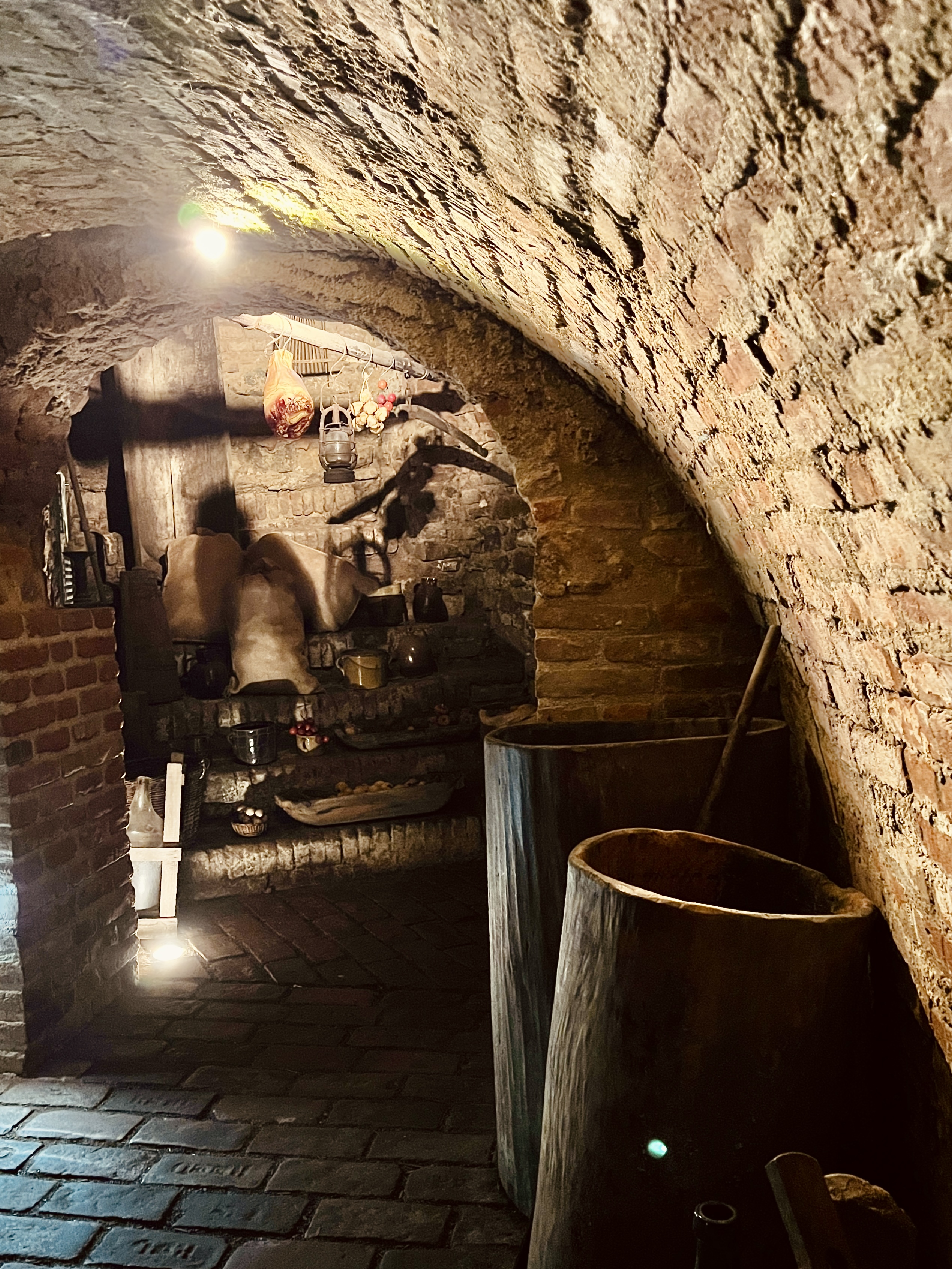

The first surprise was the city itself. I had been there before, but just shortly for less than a day. It’s a small city with a very friendly vibe and more than enough to do for a weekend. One of the things I discovered is that there is not just the city itself and the castle above it, but also a full network of “streets” underground. Under one of the squares you can go down and discover the cellars. They were built originally mainly as food storage locations, for local residents but also some for merchants coming to sell their goods on the markets. Many of them are connected and meander all under the city at different levels of depth. Without a guide, I’m pretty sure you would get completely lost in this maze. The second surprise was the food. Both evenings in town we went to restaurants with a quite modern take on food. Very delicious, in a very different way than the traditional Czech restaurants. There were several highlights, one of them being a starter I had. This combined a black garlic sauce with fried mushrooms and cheese. Not just pretty to look at, but also deliciously savoury and quite different from many other starters I have eaten. So clearly, two days was not enough to enjoy all the cultural sights nor the food that there was on offer. But for sure, it left me with some new inspiration and the desire to discover more.
Black Garlic Aioli with Mushrooms and Rösti
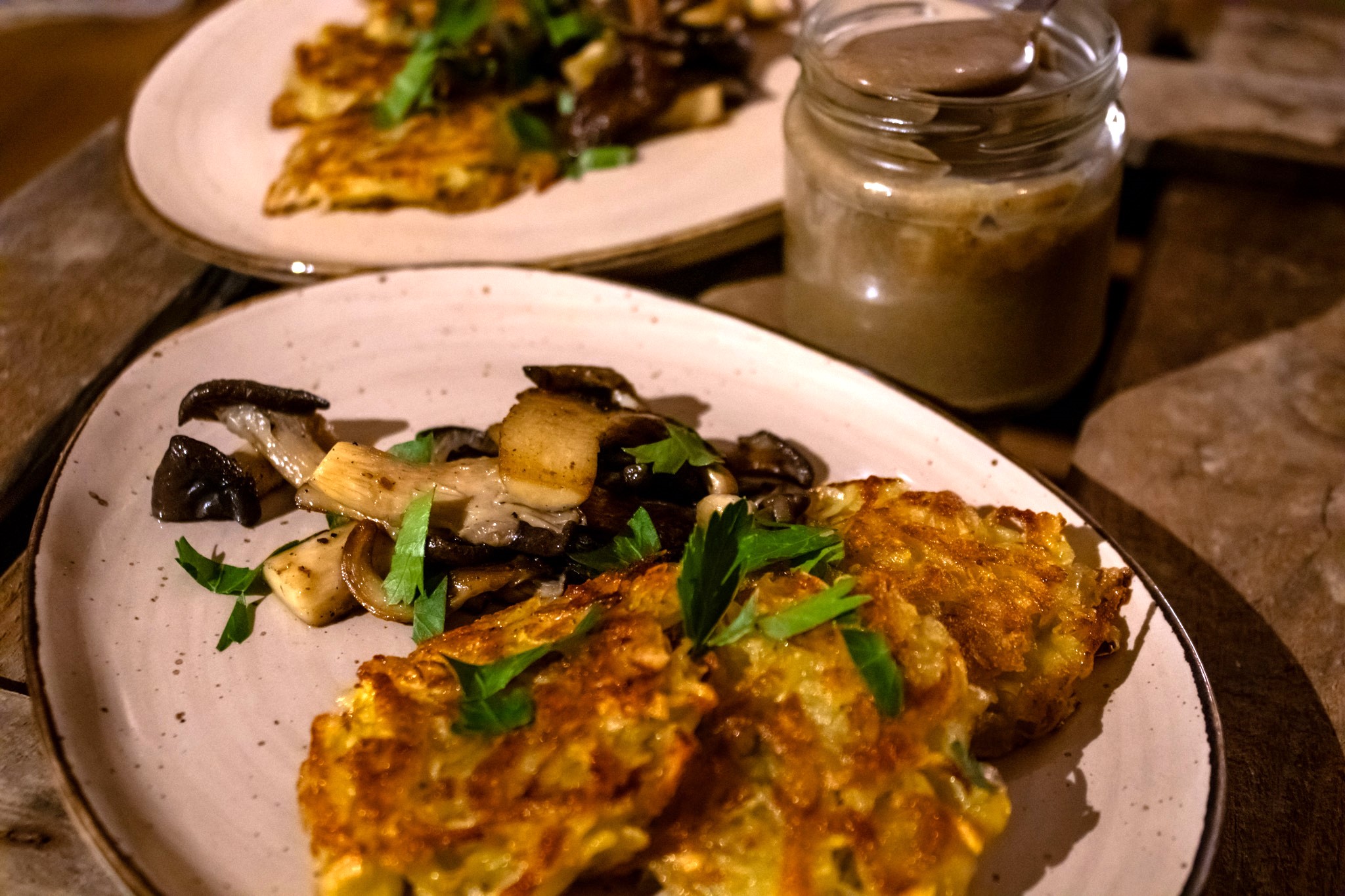
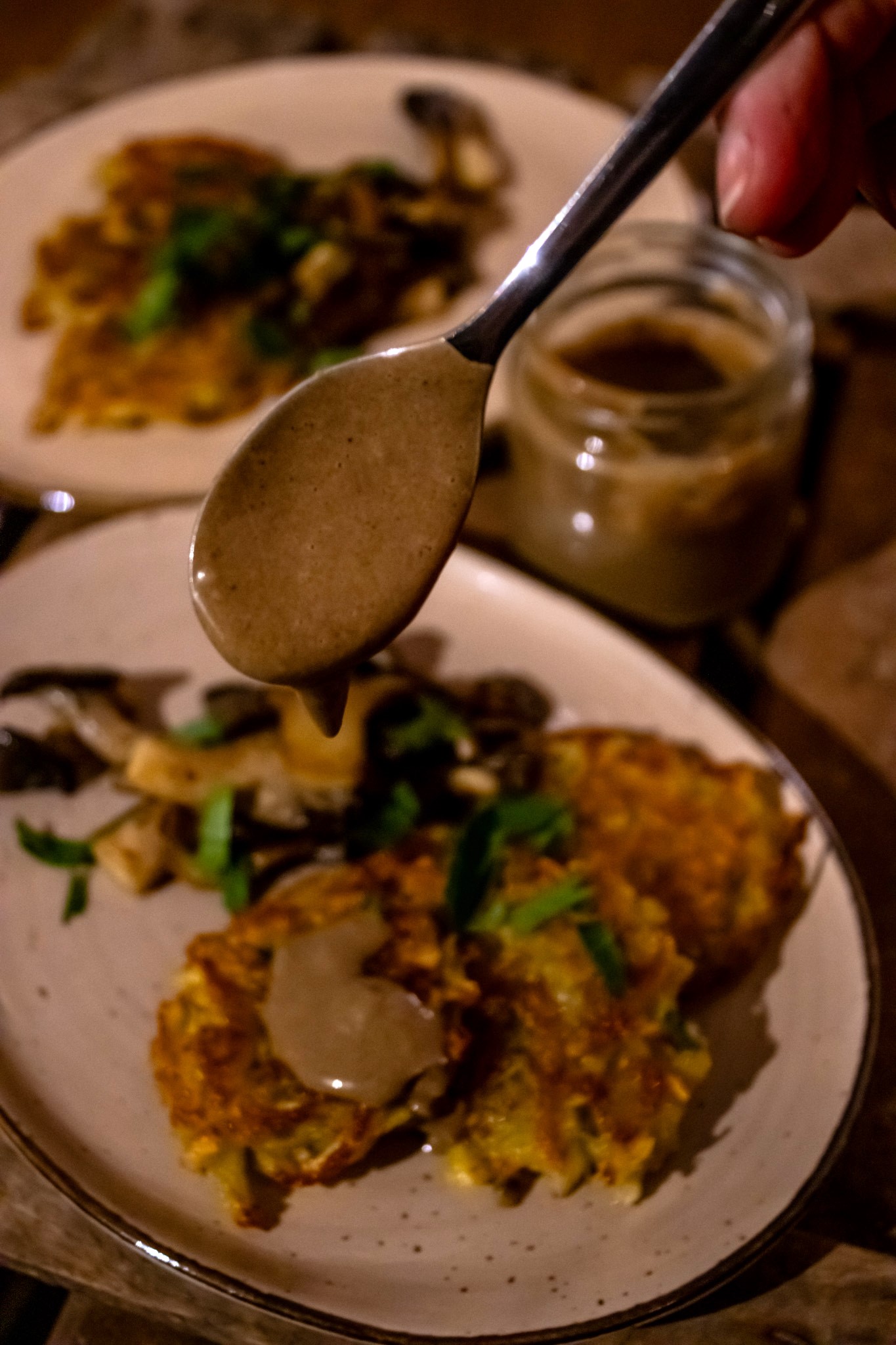
Black garlic is not a different type of garlic. It is the “normal” garlic that has been aged. It is basically made by placing the whole garlic bulbs for several weeks in a warm, controlled environment. The garlic then turns black and has a completely different flavour than fresh garlic. It is much less pungent, it loses its strong smell as well and it is sticky with almost some sweet notes in it. A very interesting and different flavour to add to your food. It seems to have become more well-known recently, meaning it is also becoming more easy to buy. You can definitely buy it online but also in specialty spice stores and in some Asian groceries.
For the aioli, I prefer to take a light olive oil or a mixture of olive oil and sunflower oil so that the flavour of the oil does not overpower the aioli. I always use an immersion blender to make mayonaise or aioli, as I find it more efficient than whisking by hand. Home made aioli can be kept in the fridge for a maximum of two weeks.
Ingredients (for 2 as starter or lunch)
- Potatoes – peeled, 240 grams
- 20 grams of butter
- 130 grams of oyster mushrooms
- Half a fresh chilli, seeds removed
- Small bunch of parsley
- Olive oil
- Salt
- Black pepper
Black garlic aioli
- 1 egg
- Lemon juice
- Half a garlic clove
- 5 black garlic cloves
- Salt
- Mustard – half a teaspoon of a mild version
- 90 ml olive oil
- 50 ml sunflower oil
For the aioli, finely chop the normal and black garlic. Place in a recipient that is just a bit wider than your immersion blender. Add the mustard, a splash of lemon juice and a pinch of salt. Break the egg in there and try to keep the egg yolk whole. Add both oils on top of the egg. Then, place the head of your immersion blender carefully over the egg yolk, all the way on the bottom of your recipient. Turn on the blender. You should see the oil and the egg emulsifying very quickly. Once you see the start of the emulsification, carefully move your blender upwards. Continue blending until the mixture has emulsified and thickened up. Taste to see if any additional salt or lemon juice are needed.
Grate the potatoes on the rough side of a boxgrater. Using your hands, squeeze out as much moisture as possible. Add a good pinch of salt to the potatoes.
Place a frying pan with the butter over a low fire. Once the butter starts to bubble, use your hands to shape 6 balls out of the grated potatoe and flatten them into discs. Add to the pan with the butter. Press them down with a spoon or a spatula to have a more even rösti. Cook the röstis on the first side for around 7-8 minutes, until dark golden brown. Once this is done, carefully flip over the röstis and cook for the same amount of time over medium to low fire on the other side. Place the röstis on kitchen paper to get rid of additional fat.
While the röstis are cooking, slice or tear the mushrooms into long slices. Chop the chilli in small pieces. Heat the olive oil in a frying pan with the chilli over a medium to high fire. Once the oil is hot, add the mushrooms. When the mushrooms start browning, season with a good pinch of salt and some black pepper. After around 6-8 minutes the mushrooms should have browned and cooked through.
Serve the röstis and the mushrooms with the black garlic aioli and sprinkle with finely chopped parsley.
 The roaming chilli
This looks good, and I surmise it tastes good too! If I may ask though, is the rosti here same as the latke or there are differences between them?
LikeLike
Hi Monch! They are quite similar but not the same. Latkes are usually made with a batter that uses egg and flour for binding. Röstis are very simple and are just the grated potato and salt, fried in butter. Both can be delicious though, in my opinion!
LikeLiked by 1 person
I see. Thank you very much for clarifying!
LikeLike